Fiber Reinforcement in Dentistry: How It Works and Why It Matters
Fiber reinforcement has become an essential part of modern restorative dentistry. Unlike traditional rigid materials, fiber systems introduce a different concept: strength combined with flexibility. This balance allows restorations to behave more naturally under functional load.
HOW IT WORKS
The principle behind fiber reinforcement
Fiber reinforcement does not simply “add strength.”
It works by:
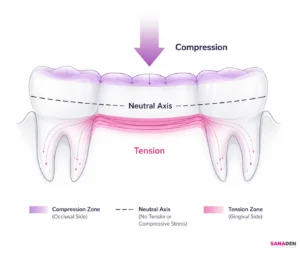
• distributing stress
• absorbing functional load
• helping prevent crack propagation
Instead of concentrating forces in one area, fibers help distribute them throughout the structure.
STRUCTURE MATTERS
Why fiber design is critical
The effectiveness of fiber reinforcement depends on:
• fiber orientation
• weaving structure
• interaction with composite materials
A well-designed structure supports:
• resin penetration
• strong integration
• balanced mechanical behavior
CLINICAL IMPACT
What this means in practice
Fiber reinforcement can help achieve:
• thinner restorations
• reduced risk of fracture
• more predictable clinical outcomes
It is especially useful in situations where traditional rigid materials may be more prone to failure.
CONNECTION TO FIBER BRIDGE
The Fiber Bridge concept
Fiber Bridge uses a structured UHMWPE fiber system designed to:
• combine flexibility with strength
• integrate effectively with composite materials
• adapt to different clinical situations
CONCLUSION
Fiber reinforcement is not just a material.
It represents a different approach to load management, structural behavior and restoration design.