Periodontal splinting is used to stabilize mobile teeth by connecting them into a functional unit. Fiber-Bridge provides a flexible reinforcement that supports physiological load distribution while maintaining patient comfort and aesthetics.
Indicazioni cliniche
Periodontal tooth mobility
Secondary occlusal trauma
Long-term stabilization
Post-periodontal therapy retention
Adjunctive periodontal treatment
Benefici
Conservative treatment approach
Aesthetic invisible reinforcement
Comfortable for patients
Adaptable to different clinical situations
Can be performed chairside
Procedura Step-by-Step
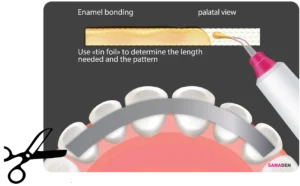
• By using a “tin foil” determine a pattern on how you would like to place the splinting. • Cut the corresponding length of Fiber-Bridge. • Apply one layer of bonding or adhesive directly onto the section of Fiber-Bridge.
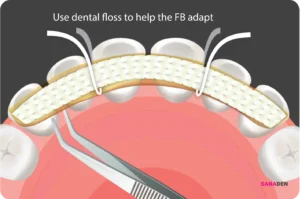
• Apply a thin layer of bonding to a treated clean / conditioned surface. • Place and press the Fiber-Bridge element with your gloved fingers in the desired position. • You can help the adaptation of FB to the interproximal areas by pulling parts of floss and adjusting with cotton pliers.
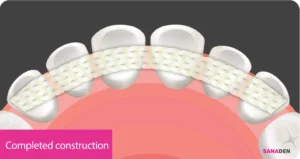
• Cover the Fiber-Bridge element with incremental layers of an unfilled or slightly filled composit or luting cement. • Don’t leave fibers exposed in the mouth.
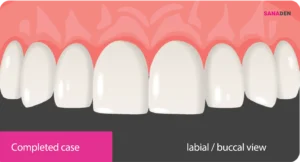
• Lightcure and polish. • From the front the splinting is invisible.