Fiber Posts vs Metal Posts:
What Really Matters in Modern Restorative Dentistry
For many years Especially in the ’90s), metal posts were considered the standard solution for post-endodontic restorations.
Today, clinical approaches have evolved toward more conservative and biologically compatible solutions.
Fiber posts represent a shift in philosophy — from rigidity to balance.
Why traditional metal posts can be problematic
Metal posts provide high strength, but they also introduce significant stress into the root.
This may lead to:
- root fractures
- stress concentration
- catastrophic failures
In many cases, failure is not repairable.
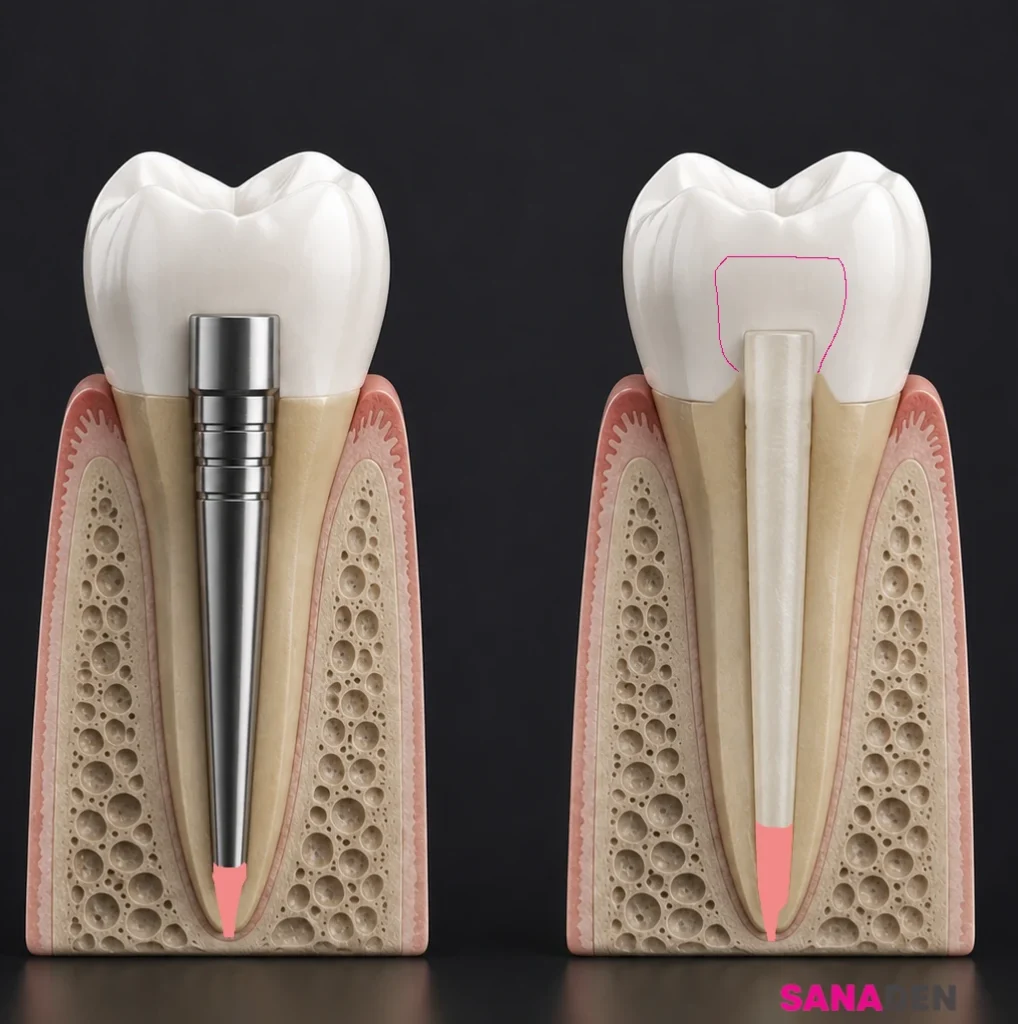
FIBER POSTS APPROACH
A different concept
Fiber posts are designed to behave more like natural dentin.
Key advantages:
- elastic modulus similar to dentin
- better stress distribution
- may help reduce the risk of unfavorable root fractures
Rather than concentrating stresses, fiber posts help distribute functional loads more evenly throughout the restored tooth.
Metal vs Fiber
Metal posts:
- very rigid
- high stress concentration
- risk of root fracture
Fiber posts:
- flexible
- balanced load distribution
- more favorable biomechanical behavior
Why it matters
Modern dentistry is moving toward:
- minimally invasive techniques
- preservation of tooth structure
- long-term predictability
Fiber posts support this approach.
The importance of material design
The performance of a fiber post depends on:
- fiber structure
- surface properties
- adhesion compatibility
Well-designed fiber posts may improve adhesive integration and help reduce the risk of debonding.
CONCLUSION
Choosing a post is not only about strength.
It is about achieving a balance between retention, adhesion and preservation of the remaining tooth structure.